LED Sports Lighting Guide: How to Choose High-Performance Sports Lighting
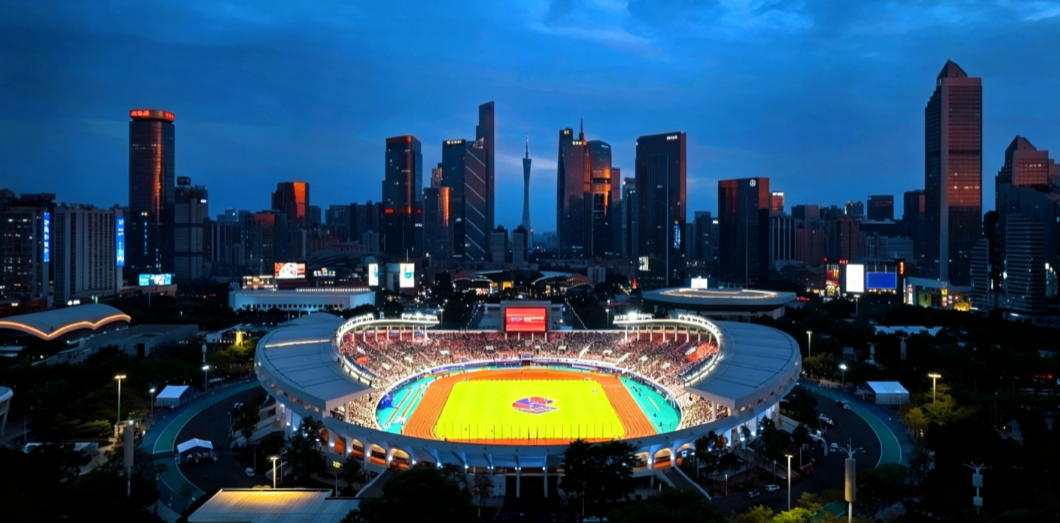
Sports lighting plays a vital role in creating a safe, comfortable, and high-performance environment for athletes, officials, and spectators. Whether it is a football stadium, tennis court, basketball arena, or multi-purpose sports facility, a reliable lighting system directly affects visibility, gameplay, and the overall event experience.
Compared with traditional metal halide lighting, LED sports lighting delivers higher energy efficiency, longer service life, better light quality, and lower maintenance costs. As a result, more stadium owners, municipalities, schools, and sports clubs are replacing conventional lighting systems with modern LED solutions.
This guide explains the key factors to consider when selecting LED sports lighting, introduces common lighting standards, and outlines the design process for building an efficient and reliable sports lighting system.
1. What Is LED Sports Lighting?
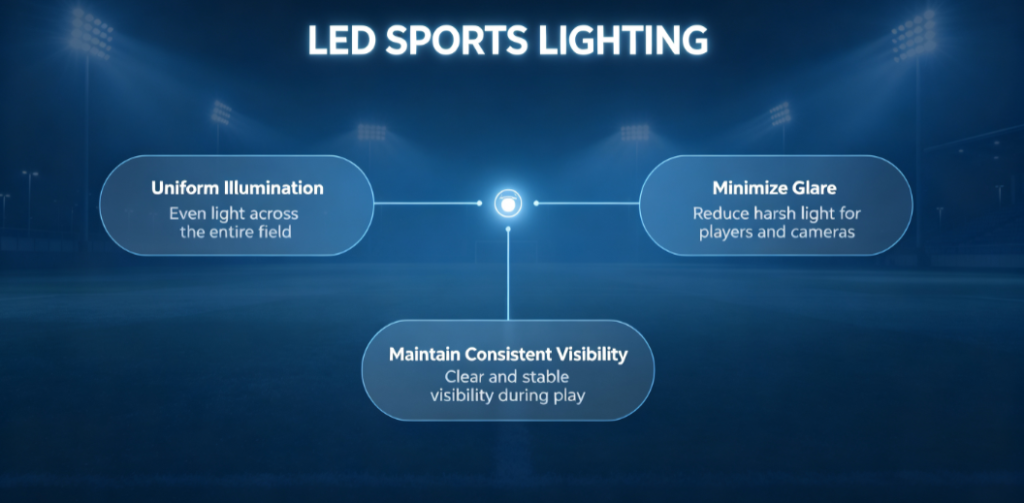
LED sports lighting refers to high-performance lighting systems specifically designed for indoor and outdoor sports venues. Unlike conventional floodlights, sports lighting must provide uniform illumination, minimize glare, and maintain consistent visibility across the entire playing area.
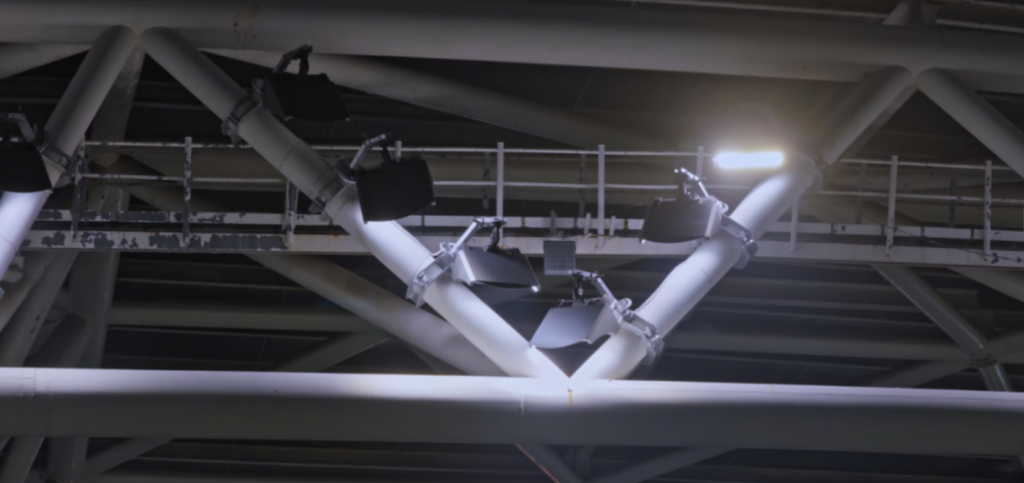
Modern LED sports lights typically consist of high-efficiency LED chips, precision optical lenses, intelligent drivers, and advanced heat dissipation systems. Together, these components deliver stable performance while reducing energy consumption.
LED sports lighting is widely used in:
- Football stadiums
- Basketball courts
- Badminton courts
- Tennis courts
- Table tennis fields
- Multi-purpose sports centers
2. Why More Sports Facilities Are Choosing LED Lighting
The transition to LED lighting offers several long-term advantages for sports facilities.
Higher Energy Efficiency
LED sports lights consume significantly less electricity than traditional metal halide fixtures while maintaining excellent brightness. This helps reduce operating costs, especially for venues with frequent nighttime events.
Better Lighting Performance
High-quality LED fixtures provide excellent uniformity, high color rendering, and flicker-free illumination, allowing athletes to react quickly while improving the viewing experience for spectators and broadcast cameras.
Smart Lighting Control
Modern sports lighting systems can integrate intelligent control functions such as scheduled operation, brightness adjustment, and remote management, helping operators improve energy efficiency and simplify daily maintenance.
3. Sports Lighting Requirements by Venue
Every sports venue requires a different lighting solution.
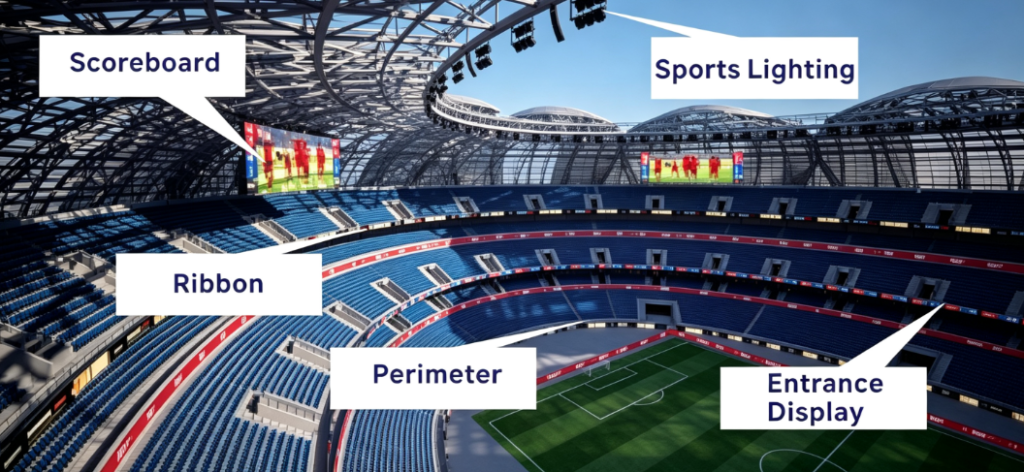
Football and soccer stadiums require high illumination levels and excellent uniformity to ensure clear visibility across the entire field. For professional competitions, lighting systems should also meet television broadcasting requirements.
Basketball courts place greater emphasis on glare control and visual comfort because players frequently look upward during fast-paced games.
Tennis courts require balanced illumination that allows players to track fast-moving balls without distracting shadows.
Baseball fields often require different lighting levels between the infield and outfield, making fixture placement especially important.
4. How to Choose the Right LED Sports Lighting
Selecting the right lighting system involves more than choosing the highest wattage.
Important factors include:
- Appropriate illuminance for the venue
- Good lighting uniformity
- Suitable beam angle
- High CRI for accurate color reproduction
- Proper color temperature
- Weather protection for outdoor installations
- Reliable surge protection
- Efficient heat dissipation
- High-quality LED drivers
- Long warranty and technical support
A well-designed lighting system delivers better performance while reducing operating costs throughout its lifetime.
5. Sports Lighting Design and Standards
Professional sports lighting design begins with understanding the purpose of the venue, whether for training, recreational activities, regional competitions, or international events.
Lighting designers evaluate factors such as pole height, fixture locations, beam angles, surrounding environment, and expected illumination levels before selecting the appropriate lighting solution.
At Unilumin Sports, every project can be supported by DIALux simulation, allowing customers to visualize lighting performance before installation. Lighting simulations help optimize fixture layout, improve uniformity, reduce glare, and minimize unnecessary light spill, providing greater confidence throughout the project planning process.
Sports lighting projects should also comply with relevant international standards, including ENEC, CE, RoHS.
6. Installation and Maintenance
Proper installation is essential for achieving the expected lighting performance.
Fixtures should be mounted at the correct height and angle, while electrical connections must comply with local regulations. Regular inspections, lens cleaning, and routine maintenance help maintain brightness and extend system lifespan.
Because LED fixtures require less maintenance than traditional lighting systems, facility operators can reduce downtime and maintenance costs over the long term.
LED sports lighting has become the preferred solution for modern sports venues because it combines energy efficiency, excellent lighting quality, and long-term reliability. From local training grounds to international stadiums, a professionally designed lighting system improves athlete performance, enhances the spectator experience, and lowers operating costs.
By choosing the right fixtures, following recognized lighting standards, and working with an experienced lighting partner, sports facilities can achieve safe, efficient, and sustainable lighting for years to come.
Unilumin Sports provides professional LED sports lighting solutions for stadiums, arenas, courts, and sports complexes worldwide. From product selection and DIALux simulation to project implementation and technical support, our team is committed to delivering lighting systems tailored to the unique requirements of every sports venue.