How tall should pickleball court lights be?
- LED Sport lighting
- Pickleball Court Lights
- Led Pickleball lights
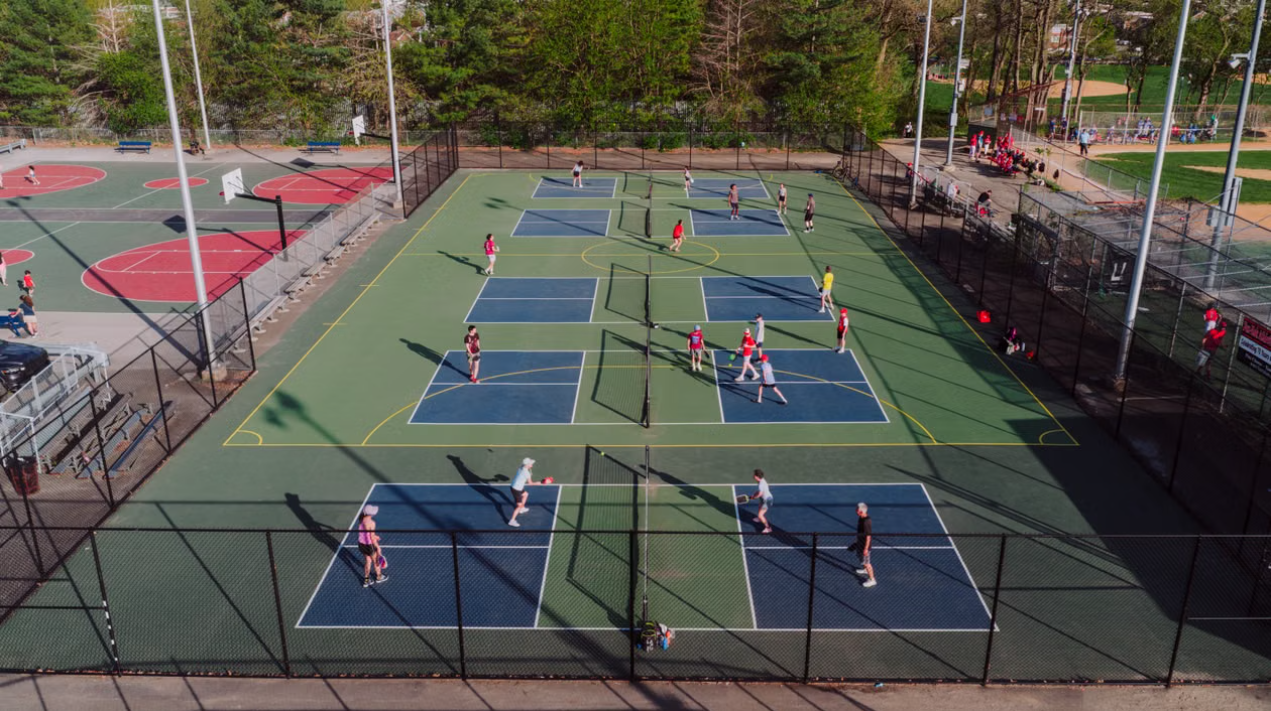
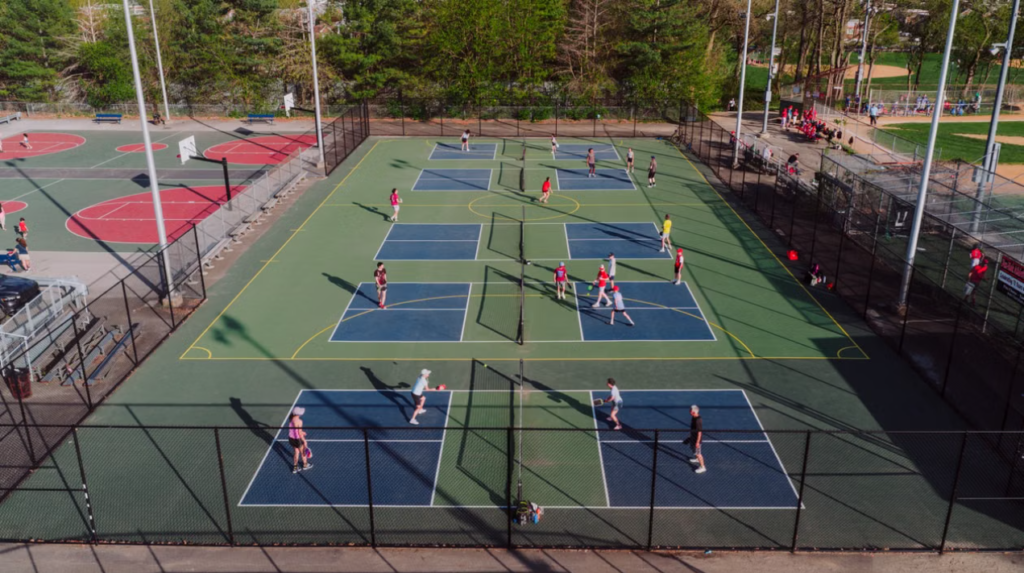
Choosing the right height for pickleball court lights is an important part of creating a safe, comfortable, and consistent playing environment. While there is no single pole height that applies to every pickleball court, 20 to 26 feet is a commonly used range in outdoor pickleball lighting projects.
The appropriate height depends on several factors, including the number of courts, pole location, lighting coverage, glare control, and the optical performance of the fixtures. USA Pickleball also recommends keeping light poles at least 5 feet from the court sideline and notes that larger lighting areas may require higher poles.
For a professional pickleball court lighting design, pole height should therefore be considered together with fixture selection and photometric analysis rather than chosen as a standalone specification.

1. What Is the Typical Height for Pickleball Court Lights?
For outdoor pickleball facilities, 20–26 feet is a common range for light pole height. However, this range should be understood as industry practice, not a universal standard.
A typical approach may look like the following:

2. What Determines the Right Pole Height?
Number of Courts
The number and arrangement of courts can have a major effect on lighting design. A single court has a relatively limited coverage area, while a facility with several courts may require fixtures to illuminate a much larger area. Higher poles can sometimes provide broader coverage, but the final height also depends on fixture output and optical distribution. USA Pickleball notes that larger areas may require higher light poles
Pole Location
Pole height cannot be considered separately from pole location. USA Pickleball recommends that light poles be positioned at least 5 feet from the court sideline and preferably centered on or immediately outside the fence or court area. The position of the pole also affects the player’s viewing angle. For this reason, well-designed pickleball court lights are typically positioned so that light can be directed across the court rather than directly into players’ primary lines of sight.
Lighting Uniformity
A pickleball court should not simply be bright; the light should be distributed consistently across the playing area.
Uneven lighting can create bright spots and darker areas, making it more difficult for players to track the ball. USA Pickleball recommends lighting that is uniformly distributed throughout the area of play and emphasizes the importance of minimizing shadows and glare.
This is why pole height should be evaluated together with:
- Fixture output
- Beam distribution
- Pole spacing
- Mounting position
- Aiming angle
Glare Control
Glare is particularly important for pickleball because players frequently look upward to track the ball. A fixture mounted at the wrong height or angle can create uncomfortable brightness in a player’s field of view. USA Pickleball recommends high-quality lighting solutions that minimize shadows and glare. The objective is therefore not simply to increase mounting height, but to create an optical system that delivers light where it is needed while reducing direct glare.
How Unilumin Sports Approaches Pickleball Lighting
For sports facilities, lighting should be treated as part of the overall venue design rather than simply a collection of individual fixtures. Unilumin Sports provides professional sports lighting and integrated sports venue solutions, with experience across international sports environments. Our sports solutions combine lighting, control, and other venue technologies to support different sports and facility requirements.
More Posts

Complete Guide of Golf Course Lighting Design
Complete Guide of Golf Co

Golf Lighting: What You Need to Know Before Installation
Golf Lighting: What You N

How Premium Driving Range Lighting Unlocks New Nighttime Revenue
How Premium Driving Range

Understanding Uniformity and Glare Standards in Golf Course Lighting
Understanding Uniformity

